Tuesday, May 18, 2010

Great Movies That Made Going to the Movies Suck #11- American Pie

Create your own banner at mybannermaker.com!

American Pie came in the last year of the old millennium and almost single-handedly turned mainstream comedy into a dirty word. It was such a runaway success that it spawned hundreds of imitators and knock offs that were made for so many wrong reasons that it’s almost hard to remember just how good it actually was.

And it was good. In fact it’s just about the definitive take on generation Y and the inherent inhibitions, mysteries, and magic of teenage sexuality. It may be lewd, vulgar and offensive, but the key to its heart was that it took sex seriously. This was not a film about a bunch of teens trying to get laid before graduation; it was about a bunch of curious kids who still had to learn the ropes while feeling the pressure of time slowing running out. To leave high school a virgin is, in many eyes, to not be prepared to face the world and all it’s joys and complications, as if the answer to life’s meaning when you’re a teen is revelled coitally. We used to think like that.

There’s a lot of truth in that and the film does a delicate balancing act between being obscene and being about a bunch of guys just trying to survive at being teens. It was John Hughes with f-bombs and premature ejaculation. And although the film was funny as hell it was also sweet and knowing. It was a film that truly loved these kids and all their goofy idiosyncrasies. But most of all, even though a lot of the jokes are in bad taste, they never seem to cross the line into the realms of the impossible. Everything that happens from ingested semen to unfortunate public washroom incidents to the molesting of baked goods could easy happen to any kid with a healthy social foundation and pubescent curiosity. It’s not that American Pie made us want to go hump a pie, but we’re glad as hell Jim (Jason Biggs) had the courage to do it because deep down, at that age, in that time, under such sexual naivety, it seems a logical thing to try.

For such scenes American Pie also gave birth to the term “gross-out comedy,” which, yes, made sense, but that’s not what was to be valued about it. Those kinds of things just naturally lent themselves to that group of kids as they tried new things, learned new lessons and tormented each other as only the best of friends do. But Hollywood took the term literally and turned out nearly half a decade of nearly insufferable, painfully unfunny comedy that was more focused on how much grosser it could be than the last guy instead of actually being, you know, witty, clever or likable.

The list of titles is infinite: See Spot Run, Slackers, Van Wilder, Monkeybone, Whipped, Me, Myself and Irene, and so on, until the genre bottomed out with a recently amputated testicle making its way across a hospital cafeteria and landing in some poor bum’s food. Or wait, was it when Tom Green, pretending to be a doctor, bit through an umbilical chord in Freddy Got Fingered for no better reason than to show what it would look like if a moron pretending to be a doctor bit through an umbilical chord?

The post American Pie gross-outs tested the audience. They tested how low they could go before immature teenagers would lose interest. Even John Waters, who is now, after American Pie, credited as being the originator of the gross-out comedy, felt like he was pushing boundaries as well as pushing common decency. His films, at the very least, were alive. The comedies of the early 2000s just felt uninspired, unpleasant, and unfunny as they played a vile game of one-upsmanship.

Since then Judd Apatow has reclaimed the comedy and brought back some taste, wit and emotion and reminded us of all the things that made American Pie so special in the first place: it’s heart and head were always in the right place.

Monday, May 17, 2010

Greatest Movies That Made Going to the Movies Suck #12- Lethal Weapon

Create your own banner at mybannermaker.com!

Gringo has a passion for clip art and bolding and appears courtsey of He Shot Cyrus


Who doesn't love Lethal Weapon? Mel Gibson and Danny Glover team up to kick in Gary Busey's mutant teeth. There's car chases, explosions, and nudity. Everything a growing boy needs. But Mike Lippert's super-list isn't about praising the originals, it's about blaming them for the garbage that followed their fame. For every Halloween, there's a hundred cheap knockoffs trying to ride its coattails. Lethal Weapon is no exception. Often honored as ultimate Buddy Cop movie, Richard Donner's 1987 action classic inspired a lot of garbage. Here's a look at said trash.

The truly amazing thing about the Buddy Cop genre is its diversity. Cowboy movies usually consisted of white cowboys teaming up with other white cowboys, with the occasional Indian or female exception. But for the most part, the duos looked pretty similar to one another. These movies, however, have run the gamete on cop combos.

Your more simple pairings have black cops teaming up with white cops. There's white cops teaming up with Asian cops. Black cops and Asian cops. What about a Russian cop that's forced to work with an American cop? Well, Racial differences are nothing compared to the variations coming up.

Throw age into the mix. Young white cop and old Asian cop. Old white cop (who's also an expert in Asian culture) and a black cop (who's not). Two old white cops, one of whom might be a cop killer (I'm suspecting amnesia has something to do with it).

Sometimes are there extenuating circumstances surrounding the officers. What if the cops were also reality TV stars? What if they were actually security guards? How about a black cop and a white cop who're also brothers? The possibilities are limitless. A young white cop teams up with a sassy black cab driver? Ooh! I'm getting excited now. How about a straight-laced cop is forced to team up with a rough-around-the edges cop? Think The Odd Couple meets Lethal Weapon!

Their partners don't even have to be human. Dog cops, dinosaur cops, alien cops. And if their partners don't have to be human, you better believe they don't have to fight humans either. Human cops vs. aliens. Alien cops vs. alien baddies. There's even a movie where they fight zombies with a passion for armed robbery.

And last, there are the Buddy Cop movies where half of the duo aren't! even! cops! Why team up with a trained police officer when you can fight crime with bratty little kids (a.k.a. your worse nightmare, a.k.a. a nine-year-old with a badge) or sassy taxi drivers (a.k.a. my dream lady, a.k.a Queen Latifah)?

So, let's all thank Lethal Weapon for Showdown in Little Tokyo, Showtime, Tango & Cash, Dead Heat, Rising Sun, Red Heat, Bulletproof, Theodore Rex, Collision Course, Cop and a Half, Money Train, Turner and Hooch, Taxi, Cradle 2 the Grave, K-9, Alien Nation, National Security, Hollywood Shuffle, The Glimmer Man, Righteous Kill, and the hundreds of other Buddy Cop movies that came after it.

Sunday, May 16, 2010

Greatest Movies That Made Going to the Movies Suck #13- Goodfellas

Create your own banner at mybannermaker.com!

Alright so Travis at The Movie Encyclopedia was support to take care of this entry but he has yet to send it to me so there is no written part for this one. I guarentee this will not happen again for the remianing entries. I apologize and will post it if it ever makes its way to me.

Saturday, May 15, 2010

Greatest Movies That Made Going to the Movies Suck #14- Airplane

Create your own banner at mybannermaker.com!

Hal Appears Courtsey of Forget the Popcorn

A trio of comedy theater pals with no directing experience scraped together $3.5 million and poured it into a zany little film with modest expectations. The result was an $83 million gross; WGA, Golden Globe, and BAFTA nominations; and a place as the tenth funniest American movie of all time on the American Film Institute’s 100 Years…100 Laughs list. Though it wasn’t the genesis of spoof comedy (the genre was run by Abbot and Costello in the 50s, the Carry On films in the 60s, and Mel Brooks in the 70s), 1980’s Airplane! was certainly the zenith of it.

It would be sufficient if this analysis simply limited itself to rattling off a page worth of quotes, because it’s the classic exchanges between characters and ear-to-ear-grin-inducing one liners that makes Airplane! so intoxicatingly hilarious. From “We have clearance, Clarence. Roger, Roger. What’s our vector, Victor?” to “I am serious, and don’t call me Shirley,” every minute of this movie has an ear-tickling zinger that is a sure bet to make anyone howl.

There exists a plot—former military pilot hops onboard a commercial flight to revive an old relationship, has to save said commercial flight from crashing—but it’s not the reason we watch this film. We watch it because it’s a patchwork of corny gags and clever puns and off-the-wall jokes that the directors somehow managed to string together into a coherent whole. The movie feels like an old-school Family Guy at times—letting the ridiculousness of a scene play out a touch longer than necessary, serving up jokes that you can sometimes see coming yet can’t help but laugh anyway.

What works best in Airplane! is the utter seriousness of its actors’ deliveries of their lines, despite the absurdity of what they’re actually saying. The directors cast guys like Robert Stack, Leslie Nielsen, Peter Graves, and Lloyd Bridges, all of whom were dramatic actors up to that point. Their deadpan and dour deliveries greatly enhance the humor of the entire film. It’s not just that Peter Graves asks a little boy if he’s seen a grown man naked, it’s that he’s so damn serious when he does. It’s not just that there’s a blow up doll acting as the plane’s autopilot, it’s that none of the characters are phased by it. Have you ever seen Leslie Nielsen smile? No. That’s because he’s too funny not smiling. The charm of Airplane! is that, while its filmmakers are completely aware of how ultra-goofy the world they created is, its inhabitants take it all as normalcy.

It seemed as though the momentum that was gained through the efforts of Brooks and Allen were going to be smoothly bridged into the 80s by way of Airplane!, but that was hardly the case. While a few formidable spoofs have been spawned since, the unjustifiable amount of worthless attempts that have cluttered theaters for the past three decades leads me to believe that Airplane! may very well have been the last great entry to spoofdom.

I’m not on board with the Scary Movies, Dewey Coxes, or Meet The Spartans. They exist only because they prey on thirteen-year-old boys who think the trailers look funny or think they’ll get to see some boobs if they convince their mom to buy them a ticket. Rather than featuring something clever or intelligent, these films simply reenact scenes from other films we recognize and throw in a dumb pop-culture reference. Brittney Spears shaving her head in front of a guy who looks like the guy from 300? That’s not comedy. And what is most upsetting is that the next spoof that hits theaters will still, somehow, manage to open with $15 million.

Where Airplane! succeeds, and the current spoofs fail, is that the comedy has to be intergenerational, it has to stand the test of time. An attestation to Airplane!’s awesomeness: whenever I, the guy who grew up on Jim Carrey and Judd Apatow, watch it with my dad, the guy who grew up on the Marx Brothers and Johnny Carson, we both laugh hysterically at the same jokes. There’s nothing that can be found in Epic Movie or Dance Flick that will be able make us laugh with our children. The spoofs of today are cheaply made, not just in dollars, but in brains.

Great Movies That Made Going to the Movies Suck #15- Rocky

Create your own banner at mybannermaker.com!

Note, Caroline from Let's Go to the Movies was supposed to write about Rocky, but for whatever reason missed the deadline so I had to cobble this together this morning. I know it isn't much, and if Caroline pulls through I will replace this with her piece, but for the sake of having something written, here it is.

Ah that score: the music of the underdog. Is there a more iconic or uplifting score in all of film history than that of Rocky? But although Rocky is maybe most well known for its music, it also influenced just about every other underdog/sports story since.

Although this kind of story has been beaten to death over and over again since (especially with the sequels), in 1976 Rocky felt about as fresh and hungry as any other movie out there. There wasn’t really many popular sports movies around so it’s greatest point of reference was On the Waterfront, another underdog story about a bum just trying to be by, and for one moment in his career (maybe the only time) a young Sylvester Stallone attack the screen with a hunger and yeaning that was comparable to that of one Marlon Brando.


What was so special about Rocky though is that it was genuinely about its title character. Boxing felt secondary to the plot and although the film climaxed with the coveted “Big Fight,” it wasn’t so much concerned with who won or lost, as much as it basked in the victory that Rocky had even made it that far in the first place.

If anything, Rocky is the ultimate statement about America and all of its possibilities. Rocky chases the American dream and comes out on top. It’s the kind of “land of opportunity” narrative that American film has never looked back from since be it in the sports genre of not (look at Pursuit of Happyness).

And that’s the problem; the genre has become such a stand-by that it has never quite reached the power or emotional intrigue of Rocky. The underdog sports story has been a reliable go to genre and many of the films, if nothing more, are serviceable and some are quite great (Rudy, The Invincible), but none dig quite as deep as Rocky. They aren’t quite as simple or desperate or down-n-out and therefore that don’t create that yearning that we felt in our desire to see Rocky succeed.

Worst of all, they all seem want to build towards that big game, which is usually the least interesting part of any sports film in which a team is usually pummelled until the last moment when they turn it around and win that championship. Yawn.

Thursday, May 13, 2010

Greatest Movies That Made Going to the Movies Suck #16- Snow White and the Seven Dwarfs

Create your own banner at mybannermaker.com!

When Snow White and the Seven Dwarfs dropped in 1937 no one thought it would work. Walt Disney was perceived, at the time, by his peers, to be more childish dreamer then businessman and none believed that a full length cartoon marketed to children would ever make money. Film was an adult’s world and that’s where it should remain. The rest, I think we can agree, is history.

Not only was Snow White and the Seven Dwarfs the first of its kind but it also remains one of the best of its kind as well. There was no feeling of testing the waters with Snow White, no “we’ll fix it next time” flubs. Disney scored a masterpiece on his first try and built a legacy almost immediately. Rome may not have been built in a day but in that moment in time it felt like Disney was.

Not only did Snow White bring a fairy tale to brilliant life, creating at least eight individual characters that will be remembered for the rest of film history and not only did it prove to the big wigs that there was just as much money, if not more, in marketing films to children but it was also a painstaking exercise in perfect craftsmanship. Every frame was drawn by hand, every detail coloured in with love. The experience was one of complete immersion: every part moved, every being came to life, every frame seemed to breathe.

From this Disney created other classic masterpieces such as Pinocchio, Dumbo, Bambi, Lady and the Tramp, Fantasia, and so on. But it wasn’t always to be. In the late 60s and 70s the studio fell on hard times and the love and craftsmanship was replaced with creating assembly line works, churned out simply to meet a demand. It was in this time that Wolfgang Reitherman created The Junglebook, The Sword and the Stone, The Aristocats, Robin Hood and 101 Dalmatians. The films were serviceable but hardly the classic labours of love that Disney himself had overseen in the 30s and 40s.

Instead of every frame drawn by hand backgrounds were reused, character movements were limited and the stories became less imaginative. Disney was releasing tolerable animated features, but with the lack of old Walt’s creativity, imagination and animation expertise, the effect just wasn’t the same until 1989 when the studio was once again reborn with The Little Mermaid, leading once again to decade’s worth of hits and misses.

But it wasn’t just that Disney’s achievement led to subpar animations and plenty of other studios trying to cop a feel of Disney’s magic; Snow White and the Seven Dwarfs almost single handedly changed the way the studios operated. Nowadays when multiplexes are filled up with hoards of limp and timid PG-13 horror films and action flicks in a way, that’s Disney’s fault. By showing studio bosses that kids were actually where the money was they changed their tune and outlook.

All of a sudden it was in vogue to produce works that could be advertised to children who would drag their families to the theaters to see the films over and over again and buy the DVDs and the stuffed animals and the action figures and so on. As of right now, the ideal movie goer is the adolescent male. In the 20s and early 30s this was unheard of until Disney opened those doors, making it easy for studios to want to greenlight children and teen films, no matter how second rate, knowing that the audience is already built in while films for adults not only struggle to find financing, but also venues willing to show them.

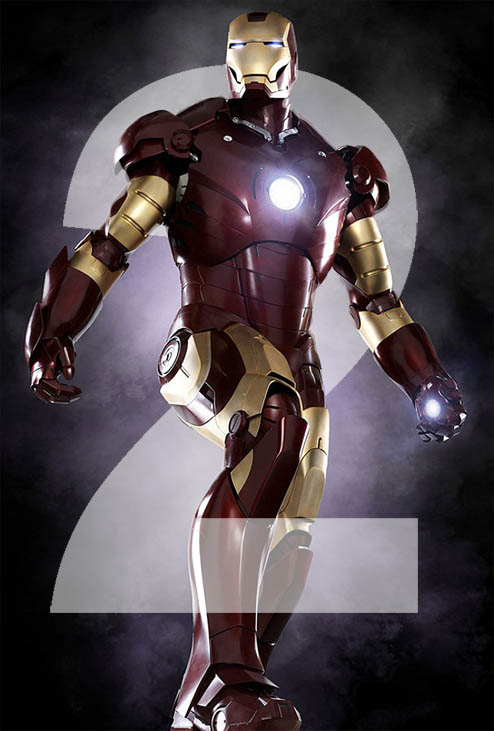
Iron Man 2 (3 out of 5)

Michael Phillips of the Chicago Tribune likes to say that he believes the last thing to ever go wrong with a movie is the actors. They’re certainly the first thing to go right with Iron Man 2. One doesn’t really expect good performances from action movies anymore but they are the only thing that keeps this bloated sequel afloat, which is top heavy in a brazenly episodic way while it tries to introduce almost a half dozen new characters and act as it’s own product placement for future Marvel films to come. The film is so busy that it’s almost a breath of fresh air then when it gets on with itself in the third and gets unapologetically noisy. Director John Favreau has become a more skilled action sequence director this time out and is still a good filmmaker, but not a good enough one to refrain from buckling under the pressure to go bigger, faster, stronger for this one. Iron Man hasn’t reached the bigness, loudness, sloppiness or dumbness of the Transformers movies, but you can see it getting there.


That’s a shame to report because, when writing about the original film two years ago I saw all the elements of a great sequel to match even Spider-Man 2 falling into place. There was, at the centre, the troubled man who needed to battle the inner conflict of being a responsible human being with being a superhero, you know, the very stuff that made Marvel comics the near monopoly name in comic book popularity? The Tony Stark of Iron Man 2 isn’t so much troubled any more other than the issue he has with keeping his inflating ego in check. Here he’s basically privatised world peace, cleared the land of war and has no discernible competition in the department of crafting suits of armour to help fend off the foes of the world.


Of course, with such an advanced and important piece of technology, the government wants it, and why wouldn’t they? Can they really leave the fate of world peace in the hands of one man? Tony Stark, if you think about it, could demolish democracy as we know it, and what if he were to use the technology to indulge his personal fancy or turned against the world? He after all, not only trumps the evil of the world, but he trumps governments as well. Of course Stark isn’t giving up the suit any time soon. He is the suit and the suit is him he argues. Without one there isn’t the other.


What I’ve just outlined is the set up to a great film that never quite manages to come. Stark promises the government that all other companies are at least a decade away from mimicking his technology, so until that happens there should be no cause for concern. This sparks the anger of the Russian Ivan Vanko (Mickey Rourke) who believes that Tony’s father stole the design of his reactor core from his father and builds one for himself to enact revenge.


This sparks the interest of fellow weapons manufacturer Justin Hammer (Sam Rockwell) who has been trying to copy Stark’s designs but failing miserably. Throw on top of that Pepper Potts (Gwyneth Paltrow) being put in charge as CEO of Stark Industries and a whole sagging midsection in which Samuel L. Jackson and Scarlett Johansson walk on for no better reason than to increase interest in an upcoming Avengers film.


What’s most surprising about Iron Man 2 is how little of it actually involves Iron Man. The film is so busy establishing new characters and worrying about Stark’s pandering to the public that it fails to give the hero anything meaningful to do until the final act, at which point, when the story finds itself and comes down to the dynamics of hero versus villain, is quite entertaining and enjoyable, in a loud, excessive kind of way.


And yet, there’s Robert Downey Jr., Mickey Rourke, Don Cheadle and Sam Rockwell all at the top of their game, always reeling the film back in while it veers wildly in every direction. They are funny and alive as characters even though the movie, at times, seems like it hasn’t the faintest idea what it should do with them. They don’t quite save the film, but they make it a heck of a lot better than it should have been.